
"coffee washing stations"
1000 article(s) found
Introduction of Chimere Manor in Lutesilo, West Province, Malaba Coffee region, Rwanda
The first problem for Malaba coffee farmers is to set up a cleaning station. The coffee fruit must be transported to the cleaning station to wash the sugar under the skin of the coffee bean within 12 hours after picking, otherwise the flavor of the coffee will be greatly damaged. In July 2001, with UNR, the Ministry of Culture and Industry of Rwanda (Office des Cultures Industrielles du Rwanda,OCIR-Caf), ACD

The flavor and taste of Rwandan Malaba coffee with breath and aroma
The first problem for Malaba coffee farmers is to set up a cleaning station. The coffee fruit must be transported to the cleaning station to wash the sugar under the skin of the coffee bean within 12 hours after picking, otherwise the flavor of the coffee will be greatly damaged. In July 2001, with UNR, the Ministry of Culture and Industry of Rwanda (Office des Cultures Industrielles du Rwanda,OCIR-Caf), ACD

Gaterama Manor Gatruma, Burundi introduces the characteristics of Burundian coffee
Professional coffee knowledge exchange more coffee bean information please follow the coffee workshop (Wechat official account cafe_style) Burundian individual coffee bean is a naturally processed bourbon grown in the Gaterama washing station in the Gitga region. Growing at an altitude of about 1700-1900 meters above sea level, only the most mature cherries are used for processing. Bourbon is the parent company of many Arabian coffee varieties

Introduction to the flavor and taste characteristics of Malaba coffee in southern Rwanda
Rwandans have been growing coffee since colonial times, but until 1999, its products were still classified as below Class C and were not popular in the global market. The reason for the poor quality is that farmers do not have a fixed procedure for washing coffee beans and do not process coffee fruits according to specifications in time. Buyers buy coffee beans at $0.33 per kilogram, and farmers keep warm by the meagre profits earned at low prices.

Lutesilo producing area of the western province of Malaba coffee in Rwanda
The first problem for Malaba coffee farmers is to set up a cleaning station. The coffee fruit must be transported to the cleaning station to wash the sugar under the skin of the coffee bean within 12 hours after picking, otherwise the flavor of the coffee will be greatly damaged. In July 2001, with UNR, the Ministry of Culture and Industry of Rwanda (Office des Cultures Industrielles du Rwanda,OCIR-Caf), ACD

Description of the Flavor of the Historical Variety treatment method of Rwandan Coffee beans
Professional baristas please follow the coffee workshop (Wechat official account cafe_style) Rwanda (Rwanda), known as Land of a Thousand Hills, is located on the equator and is surrounded by East African States such as Congo, Uganda, Tanzania and Burundi. Geographically, it has suitable conditions for growing coffee, but it has been introduced by German missionaries since 1904.

The Historical Origin of Rwandan Coffee
Historical editors originate that Rwandans have been growing coffee since colonial times, but until 1999, its products were still classified as below Class C and were not popular in the global market. The reason for the poor quality is that farmers do not have a fixed procedure for washing coffee beans and do not process coffee fruits according to specifications in time. Buyers buy coffee beans at $0.33 per kilogram, which farmers earn at low prices.

Introduction to the characteristics of fine taste treatment of Rwanda coffee bean grinding scale variety manor
The coffee fruit needs to be transported to the processing plant as soon as possible after picking, but due to the lack of domestic facilities, it is unable to deal with the fruit at the first time. The fruits are piled up after being picked, which will continue to develop and accelerate mildew and decay due to lack of ventilation. Rotten fruits will affect the quality of coffee and show defective flavor. In recent years, the production and processing of coffee in Rwanda are

A brief introduction to the description of the flavor, taste and aroma characteristics of high-quality coffee beans in Kimmel Manor
The first problem for Malaba coffee farmers is to set up a cleaning station. The coffee fruit must be transported to the cleaning station to wash the sugar under the skin of the coffee bean within 12 hours after picking, otherwise the flavor of the coffee will be greatly damaged. In July 2001, with UNR, the Ministry of Culture and Industry of Rwanda (Office des Cultures Industrielles du Rwanda,OCIR-Caf), ACD

Ethiopia washing Yegashefi G1 washing treatment Xinlinu story behind the small farmers
Professional coffee knowledge exchange More coffee bean information Please pay attention to coffee workshop (Weixin Official Accounts cafe_style) Qianjie-Yega Xuefei washing G1 Xinlinu small farmers introduced YCFCU cooperative, introduced as follows: YCFCU small farmers, harvested coffee, transportation process is particularly difficult, first beans in coffee farmers 'own small farm after harvest, preliminary screening, and then concentrated in the village
Coffee World Map--Introduction to Rwandan Coffee Development, Processing and Varieties
Professional barista exchanges, please pay attention to coffee workshop (Weixin Official Accounts cafe_style ) Rwandan coffee, the most popular African coffee after Kenya and Ethiopia. However, unlike the two famous producing countries, it has no long history of cultivation, let alone wild native varieties; this small African country is a fire phoenix reborn after disaster. Rwanda is known as
African Coffee Manor Musiui treatment Plant in the western province of Rwanda washing and treating bourbon boutique black coffee
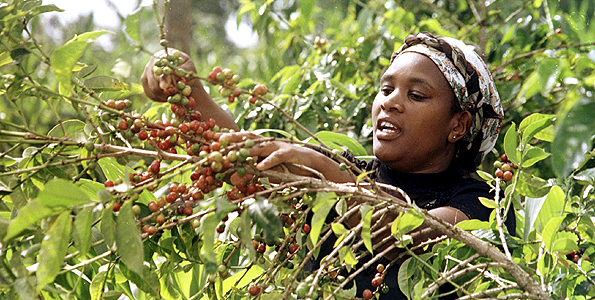
Like many African countries, Rwandan coffee is mainly produced by small farmers, and the ripe cherry fruits are collected and sent to the processing station every year during the harvest period. During the annual harvest period, the ripe coffee berries picked by farmers are concentrated in the treatment station for treatment, first selected by hand to ensure that no immature or damaged fruit is mixed in. Then remove the peel in a cool, cold ring

The influence of Zhuoyue Cup on Rwanda Coffee Industry Flavor characteristics of washing treatment of Rwandan Coffee beans
The 2008 excellent Cup encourages coffee farmers to circulate and promote the ranks of high-quality beans. Before the introduction of the excellent cup, the vast majority of coffee in Rwanda was disorderly, there was no obvious difference in quality, and there was no specific description of the flavor characteristics of high-quality beans. After the introduction of the Excellence Cup, international experts began to record and discuss Jean Lew in depth.

Introduction of Rwanda Coffee Variety-Malaba Coffee beans
Rwandans have been growing coffee since colonial times, but until 1999, its products were still classified as below Class C and were not popular in the global market. The reason for the poor quality is that farmers do not have a fixed procedure for washing coffee beans and do not process coffee fruits according to specifications in time. Buyers buy coffee beans at $0.33 per kilogram, and farmers keep warm by the meagre profits earned at low prices.

Quality characteristics of Rwanda Coffee Bean processing; introduction to the varieties of Manor with Grinding degree
In 2000, the Mayor of Malaba requested development assistance from the National University of Rwanda (UNR), which is located near the city of Butare, and the following year, the National University of Rwanda assisted in the establishment of the Joint strengthening Rwanda Agricultural Partnership (PEARL). PEARL is also supported by several organizations: the United States Agency for International Development (USAID), Michigan State University, Texas A & M University, and
Flavor characteristics of Rwandan coffee beans "the country of a thousand hills" the story characteristics of Rwandan coffee beans
For more information on coffee beans, please follow Coffee Workshop (Wechat official account cafe_style) Rwanda Coffee, the most popular African coffee after Kenya and Ethiopia. But unlike the two famous producing countries, it does not have a long history of planting, let alone native varieties everywhere in the wild. This small African country is a fire Phoenix that has been reborn after robbery.

History of coffee in Rwanda
The Rwandans of origin have been growing coffee since colonial times, but until 1999, its products were still classified as below Class C and were not popular in the global market. The reason for the poor quality is that farmers do not have a fixed procedure for washing coffee beans and do not process coffee fruits according to specifications in time. Buyers buy coffee beans at $0.33 per kilogram, and farmers rely on the meagre profits earned at low prices.
Ethiopian washing Yega Xuefei G1 washing treatment of Xinlinu small Farmers behind the Story
Professional coffee knowledge exchange more coffee bean information please follow the coffee workshop (Wechat official account cafe_style) front street-washed Yega Xuefei G1 Xinlinu small farmers introduced YCFCU cooperatives, introduced as follows: YCFCU small farmers, harvest and treatment of coffee, the transport process is particularly difficult, first of all, beans in the coffee farmers' own small farm harvest, must be preliminary screening, and then concentrated to the village cooperation

Fine coffee Rwanda coffee treatment method washing, elevated scaffolding sun drying
Rwandans have been growing coffee since colonial times, but until 1999, its products were still classified as below Class C and were not popular in the global market. The reason for the poor quality is that farmers do not have a fixed procedure for washing coffee beans and do not process coffee fruits according to specifications in time. Buyers buy coffee beans at $0.33 per kilogram, and farmers keep warm by the meagre profits earned at low prices.

Bourbon Variety-the story of coffee cultivation at the Bwayi washing plant in the MATONGO region of Burundi? Burundi
Professional coffee knowledge exchange more coffee bean information please follow the coffee workshop (Wechat official account cafe_style) bourbon variety-Burundi MATONGO production area Bwayi washing plant coffee planting story? How do you drink Burundian coffee? The Bwayi washing plant is located in the town of Matongo, Cayanza province, Burundi. An average of 4000 coffee producers contributed to Bwayi, of which 983